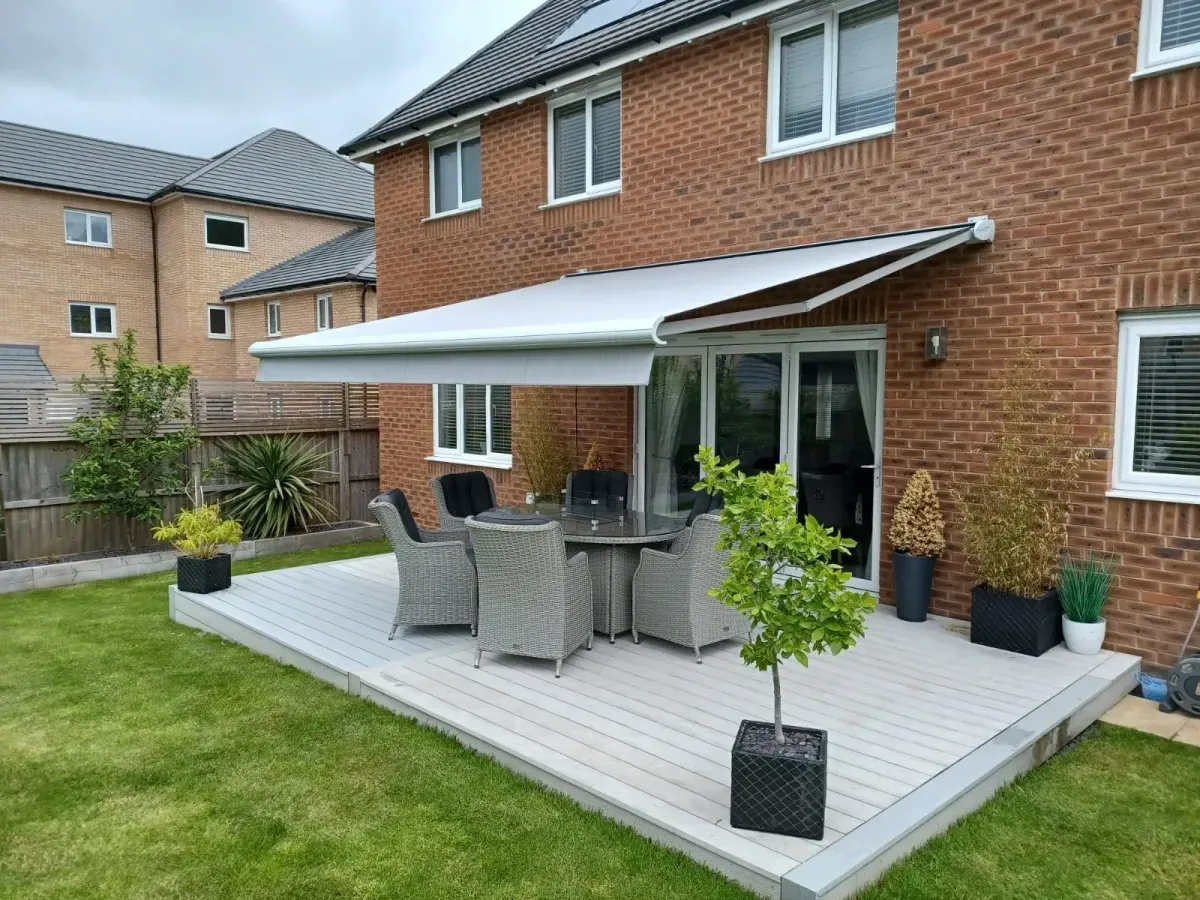
Awning Fabric Guide: How to Choose UV Protection, Colour & Durability
When most people think about buying an awning, they focus on the mechanism — motorised or manual, which cassette design, what projection. But the fabric choice is equally important. It's what you'll look at every day, what determines how much UV and heat is blocked, and what will dictate how long your awning looks its best.
This guide covers everything you need to know about awning fabrics before you buy.
Acrylic vs Polyester: What's the Difference?
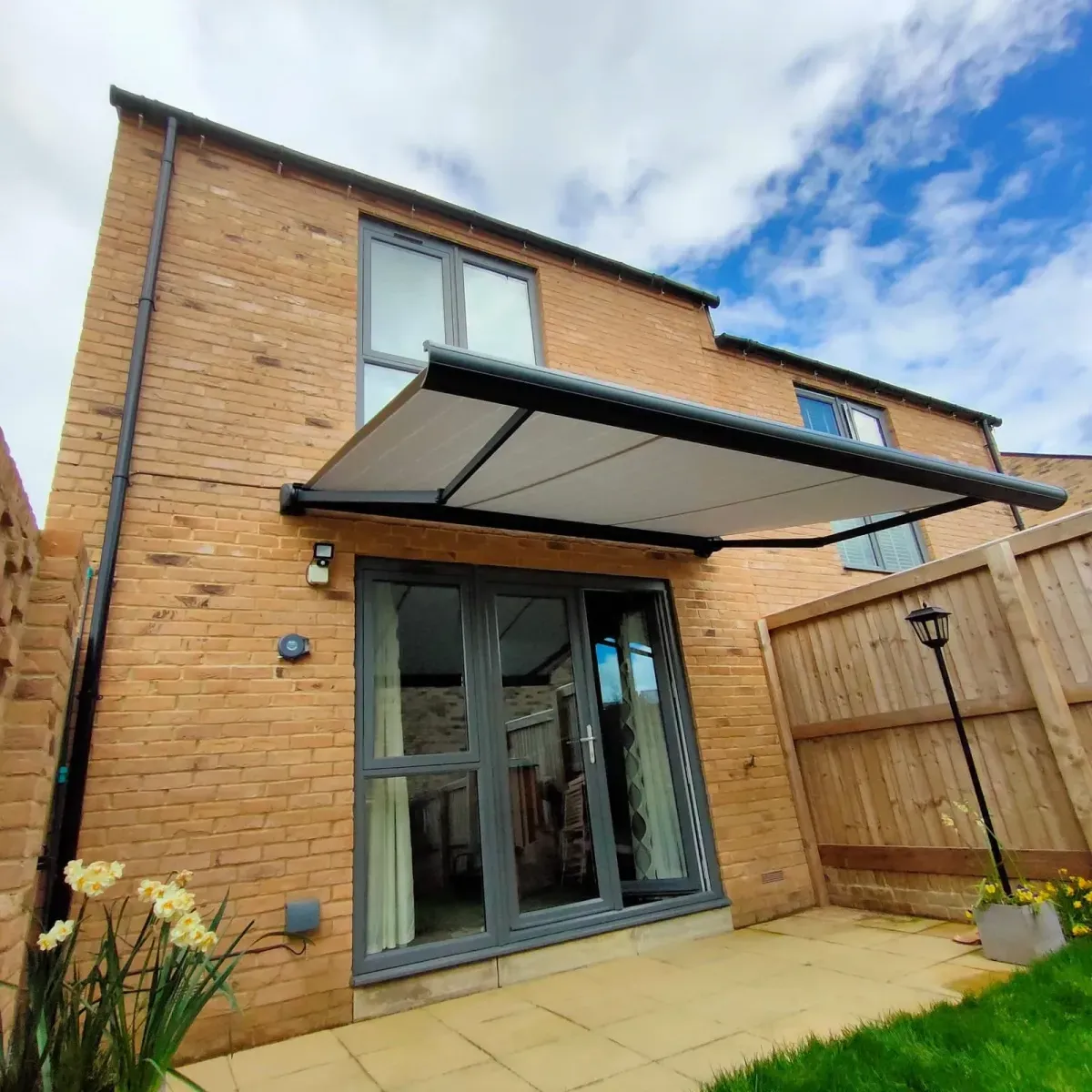
Premium acrylic fabric on the Windermere — solution-dyed for lasting colour and maximum UV protection
All Kingsmere awnings use acrylic fabrics. Here's why that matters:
- Solution-dyed acrylic: The colour is embedded throughout the fibre during manufacture — not just applied to the surface. This means the colour won't fade unevenly with sun exposure, and the fabric retains its vibrancy for years.
- Polyester (avoid): Some cheaper awnings use polyester fabric. Polyester is less resistant to UV degradation and tends to fade and weaken more quickly when exposed to sustained sunshine.
- Water resistance: Acrylic fabrics have an inherent degree of water resistance and dry quickly after rain. They won't become waterlogged or develop mildew as quickly as polyester alternatives.
Understanding UV Protection Ratings
Not all awning fabrics offer the same level of UV protection. The key metric is the UPF (Ultraviolet Protection Factor) rating:
- UPF 15–24: Good protection — blocks 93–95% of UV rays
- UPF 25–39: Very good protection — blocks 96–97% of UV rays
- UPF 40–50+: Excellent protection — blocks 97.5% or more of UV rays
All standard Kingsmere fabrics have a minimum UPF 50+ rating. This is particularly important if children or elderly family members will be spending extended time under the awning, or if the awning is used over a dining or seating area.
"People often assume an awning provides complete sun protection. It depends entirely on the fabric. With a high-quality acrylic at UPF 50+, you're getting excellent protection — equivalent to most SPF 50 suncreens." — Kingsmere surveyor
Choosing the Right Colour
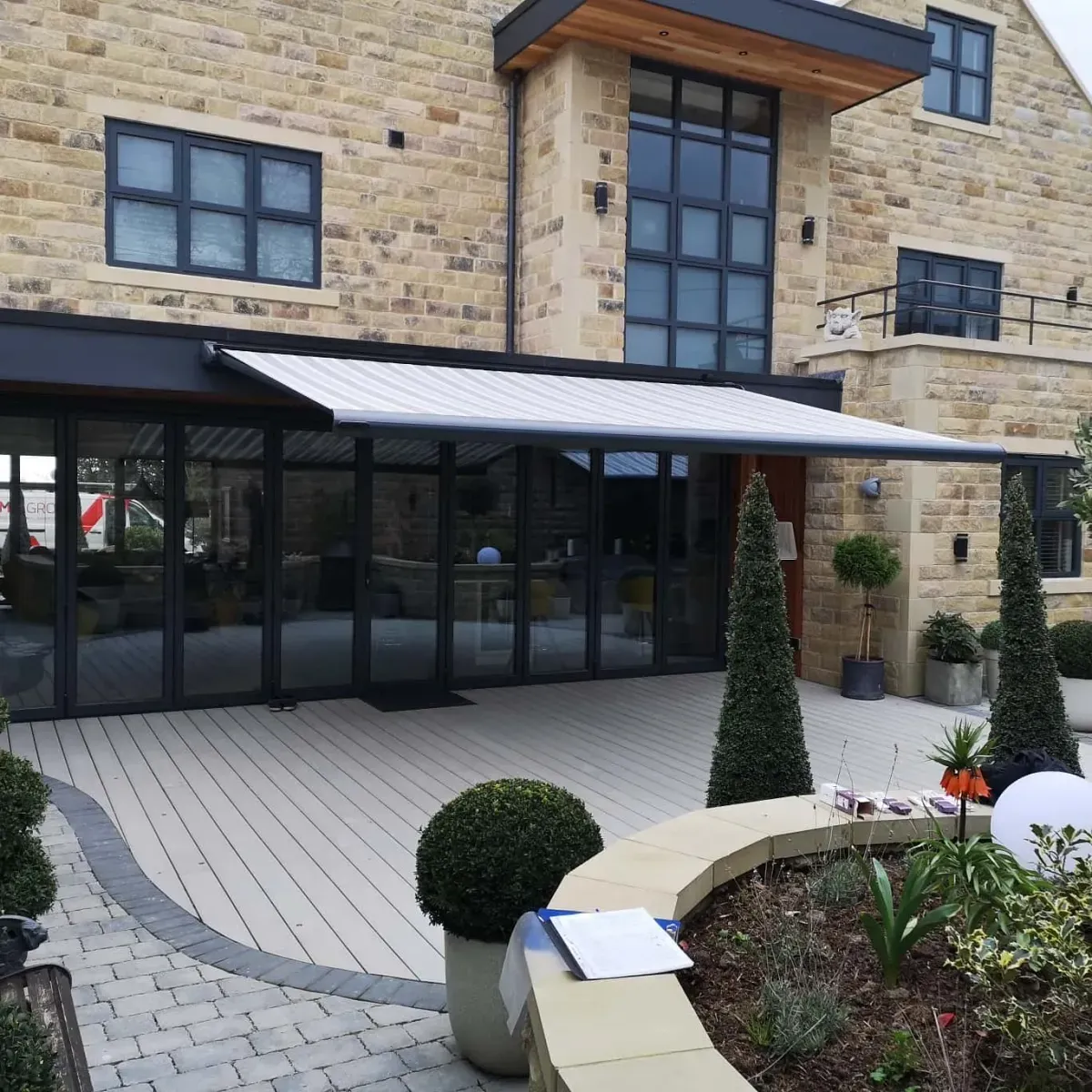
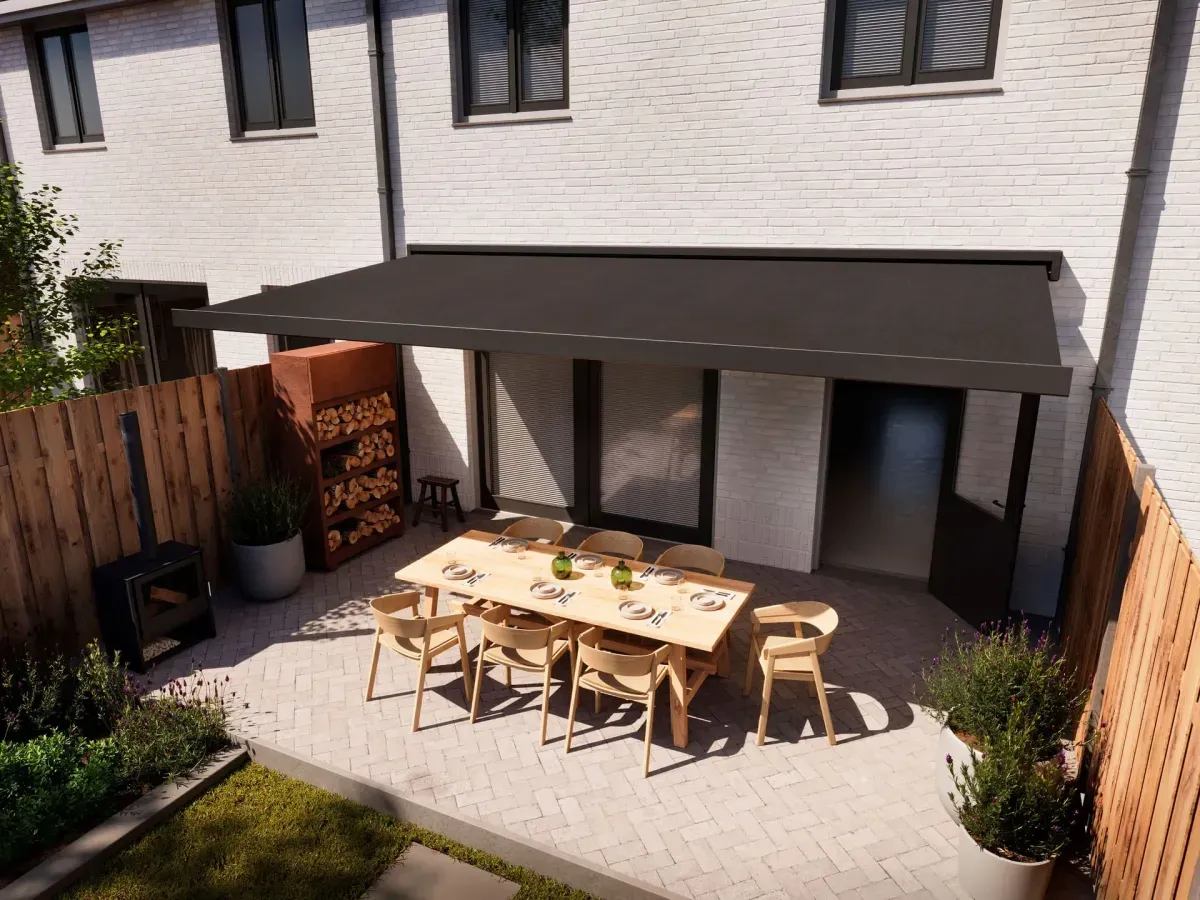
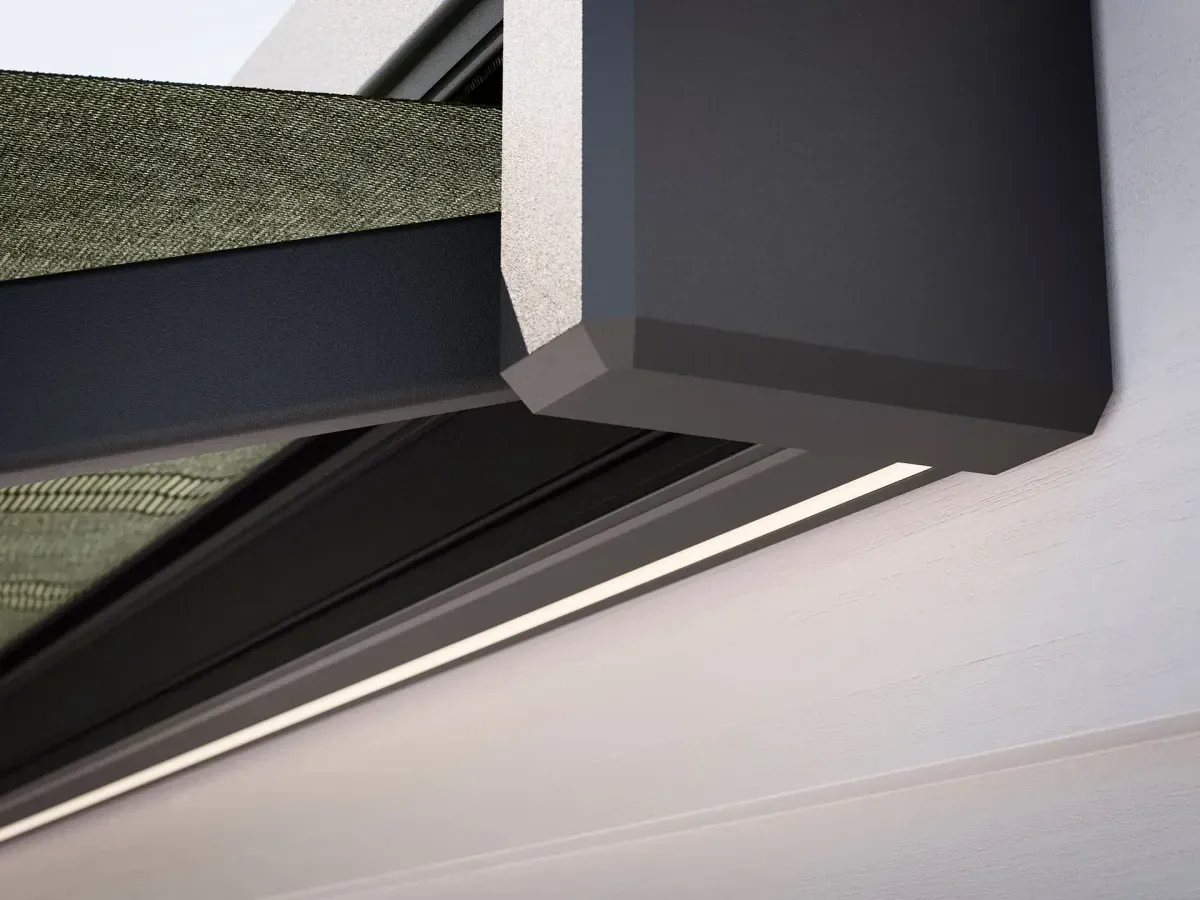
Colour is where personal taste plays the biggest role. A few principles to guide your choice:
Lighter colours reflect more heat
A cream, white or pale fabric will reflect more heat than a dark navy or charcoal. If your primary goal is keeping the area cool, lighter shades are more effective. However, they may show soiling more readily — especially under garden trees.
Stripes are timeless, plains are contemporary
Classic awning stripes — cream and forest green, cream and navy, grey and white — have an enduring appeal that works well with period properties. Plain solids in slate grey, sage green or anthracite tend to suit contemporary architecture more effectively.
Match to your render or cladding
The most successful awning fabric choices pick up a colour already present in the property — the render, the window frames, the coping stones or the garden furniture. Our surveyors will often ask to see a photo of the exterior before making recommendations.
Fabric Maintenance: Keeping It Looking Good
Acrylic fabrics are low-maintenance, but a little care goes a long way:
- Always retract the awning in sustained rain or strong wind
- Brush off leaves and debris with a soft brush while the fabric is dry
- For deeper cleaning, use warm water and a small amount of mild soap — never bleach or solvent-based cleaners
- Allow the fabric to dry completely before retracting into the cassette to prevent mildew
- In winter, if you're not planning to use the awning, retract it and consider applying a light fabric protector spray
How Many Fabric Options Does Kingsmere Offer?
Across our five awning models, we offer over 100 fabrics — covering plains, stripes, textured weaves and geometric patterns. Samples are brought to your home during the free survey so you can see the fabric in natural light, against your property, before committing.
See Fabric Samples at Your Home — Free
Our surveyors bring the full fabric swatch book to every home visit. No commitment, no pressure — just expert advice and accurate measurements, completely free of charge.
Book My Free Survey